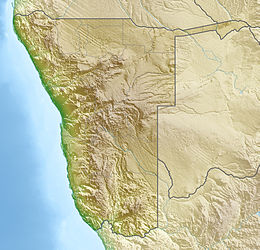
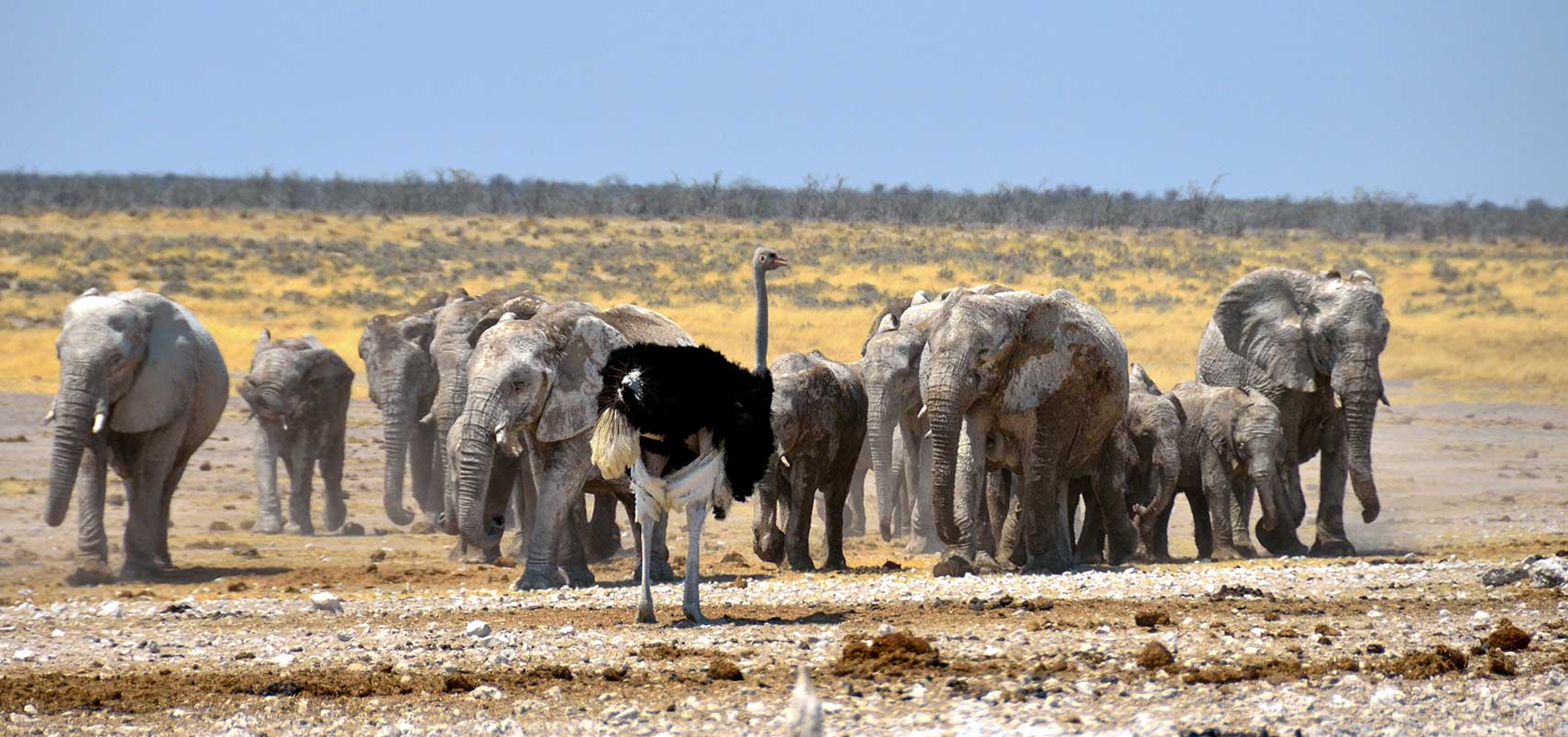
 After Mongolia, Namibia is the second least densely populated country in the world (2.7 inhabitants per square kilometre (7.0/sq mi)). Namibia got its name from the Namib desert that stretches along the coast of the Atlantic. It is also known for its wildlife.
 Namibia, country located on the southwestern coast of Africa. It is bordered by Angola to the north, Zambia to the northeast, Botswana to the east, South Africa to the southeast and south, and the Atlantic Ocean to the west. It ranges from arid in the north to desert on the coast and in the east.
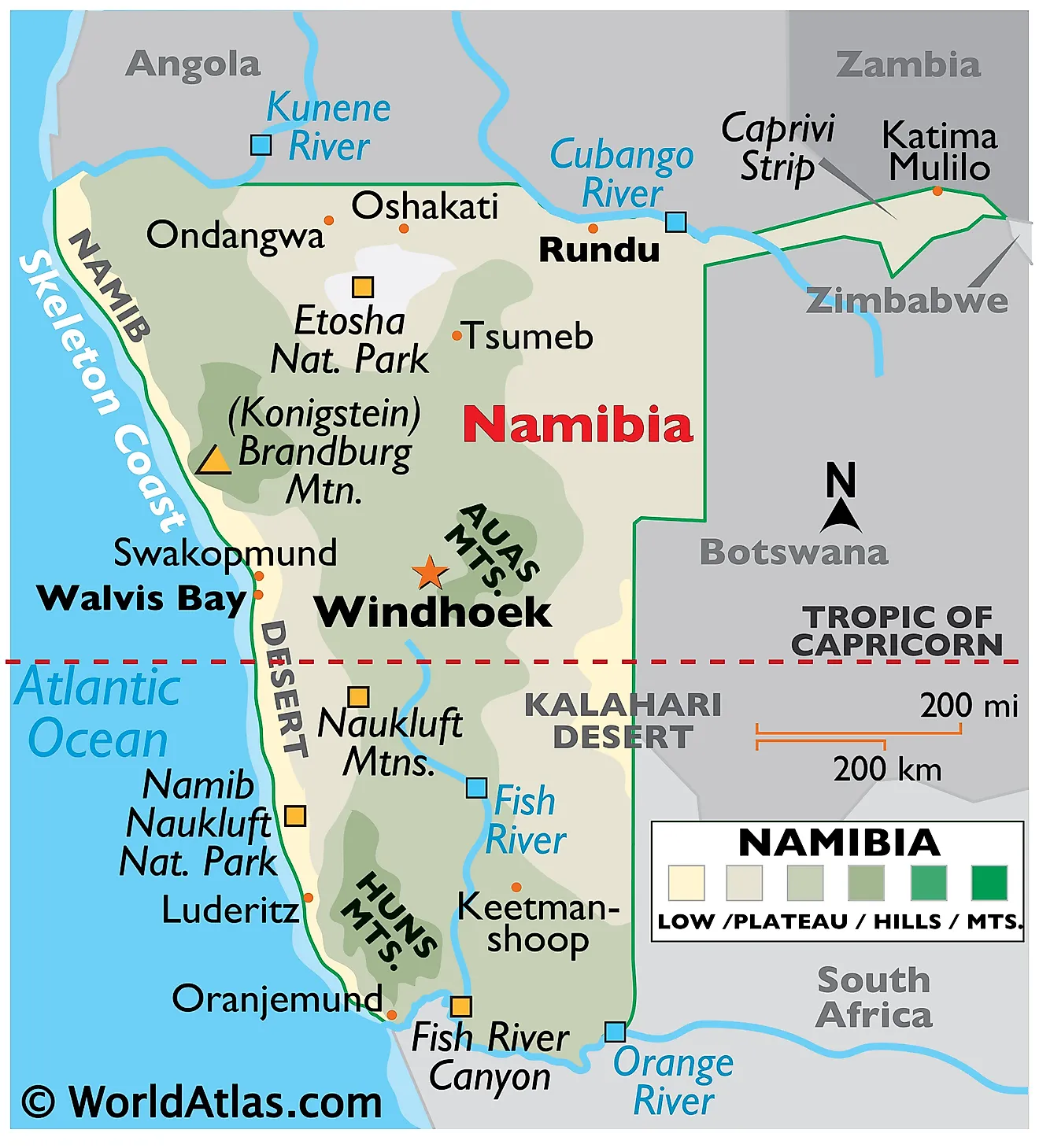 Physical map of Namibia showing major cities, terrain, national parks, rivers, and surrounding countries with international borders and outline maps. Key facts about Namibia.
 The atlas provides basic reference material on the geography of Namibia, including social, demographic, economic, infrastructural, physical, climatic, and biological features of Namibia.